
Paper trail of a river myth
The Chronicle of Kitchi-Amik
A purposeful stack of tall tales, “found” documents, and valley gossip—written so visitors can walk the legend like a museum exhibit. Enjoy it as fiction with muddy boots.
Ages of the Guardian
From first whispers to the tourist age—one continuous river story.
-
Time out of mind
The Elder’s Water
Valley storytellers say the first people to fish these bends left offerings of tobacco and polished stones “for the one who balances the current.” In porch retellings, Kitchi-Amik is less a monster than a weather of the river—appearing when greed runs hot, vanishing when respect cools the banks. Modern visitors are invited to treat this layer as atmospheric legend, not ethnography.
-
c. 1680 · Oral echo
The scaled beaver-turtle
A favorite campfire version: “Where the Shenango runs deepest, a Great One rests. Shell like river stones, tail that churns white water, eyes like sunset embers. Leave the deep pools quiet.” No manuscript survives—only the shape of the warning, polished by retelling.
-
1765 · The trapper’s log
Jean-Baptiste Moreau & the sprung lines
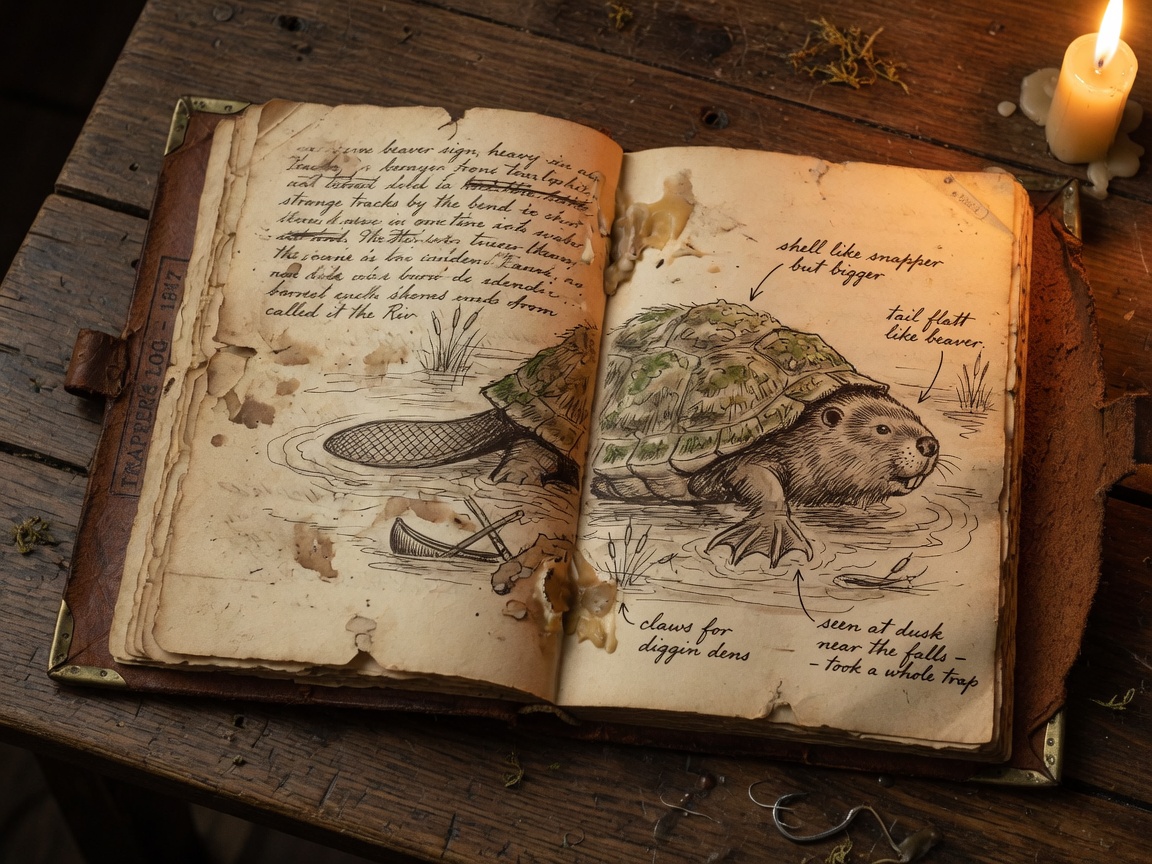
Folklore assigns a French trapper the first “written” brush with Kitchi-Amik. In the reconstructed journal (a beloved prop of local story nights), Moreau complains that his traps along the “Schenango” are dragged by an immense force. One foggy morning he claims a ridged back and wide flat tail slipped into the black water. He moved his line two bends south and never wrote the creature’s name again—only a cross and the words esprit de la rivière.
Whether Moreau existed matters less to visitors than the ritual: people still joke about “checking Moreau’s bend” when a lure disappears without a fight.
-
1834–1838 · Canal years
The diggers’ halt
During the fever of regional canal building, a fictional work gang on a Shenango cut is said to have downed tools after dusk sightings of a “walking hillock with lantern eyes.” Tracks “wider than a dinner plate” were sketched in a foreman’s book (now “lost,” of course). Work resumed after three days of rain washed the mud clean—a perfect legend ending, and a reminder that this valley’s human history is full of sweat, fog, and stories that keep crews company.
-
1890 · Farm light
The barrel-headed watcher
A farmer’s tale from the valley edge: livestock spooked toward the house; a search for a stray cow under a hard moon; “a head as broad as a barrel, eyes like coals” holding still in the current. The cow came home. The story never quite did.
-
1897 · The Clark Photograph
Harlan “Huck” Ellery’s famous mistake
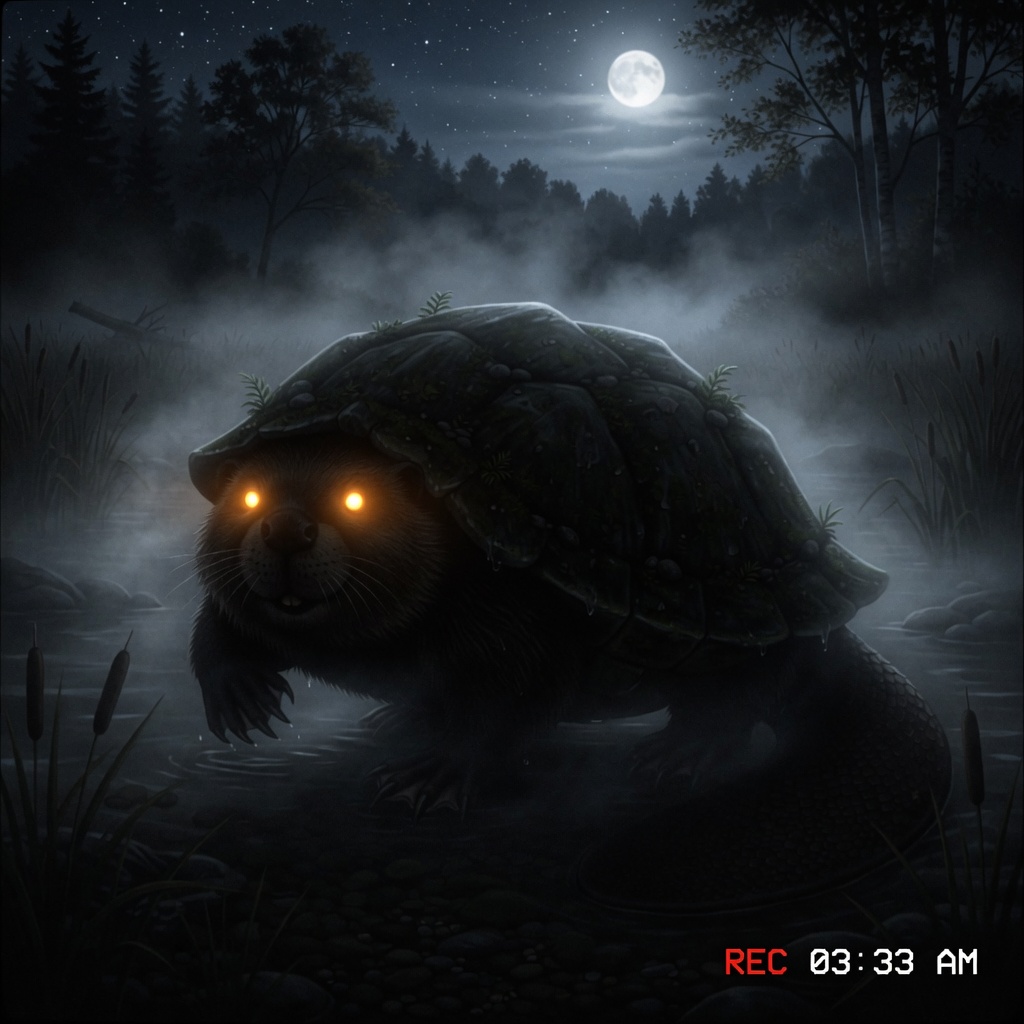
Every proper American monster needs a photograph. In Shenango lore, itinerant showman and timber scout Harlan Ellery claimed he had exposed a plate of a seven-to-ten-foot river beast just below Clark. The print—shown in a mercantile window for two weeks—looked, depending on the viewer, like either a miracle or a clever arrangement of logs, hides, and lantern light.
Ellery later winked that “the river enjoys a good joke.” Locals kept the joke running for a century. Like the Hodag’s 1896 flash of fame, the Clark Photograph is less about proof than about identity: this is a place that knows how to mythologize itself.
-
1912–1945 · Porch century
Snapper dares & wartime quiet
Children dared each other to count to thirty on foggy bridges. Mill workers swapped shift-change sightings. During the wars, letters home from the valley sometimes closed with Kitchi keeps the bend—a hometown code for “all’s as it should be.” The Guardian became a soft mascot of endurance.
-
1958 · The broken monofilament
Tournament Saturday
A bass club legend: a heavy, intelligent pull near a submerged snag; line rated for far more than any known local fish; a dark mass under the surface “like a submerged hull.” The angler cut free, packed up, and bought a round. The club still toasts “the one that keeps the secret.”
-
1998–2012 · Modern mist
Kayaks, cameras, and almosts
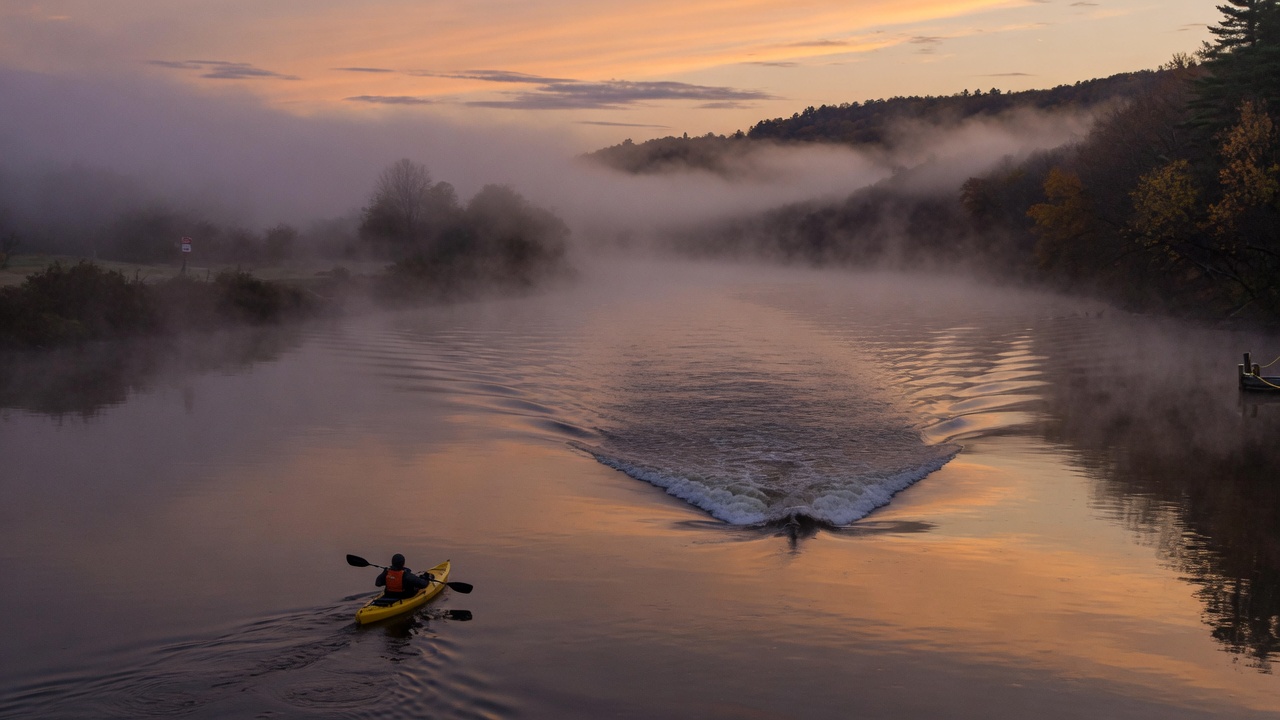
Compact cameras and later phones filled the archive with almosts: upstream wakes, amber reflections that might be eyes, audio of a low rumble under a steel bridge. A 2012 kayaker near a wide bend described a broad dark head for “one long second.” The video is shaky. The story is steady. See the Sightings Archive for the visitor-facing collection.
-
2018–2025 · Still watching
Drought snags, flood prints, and missing frames
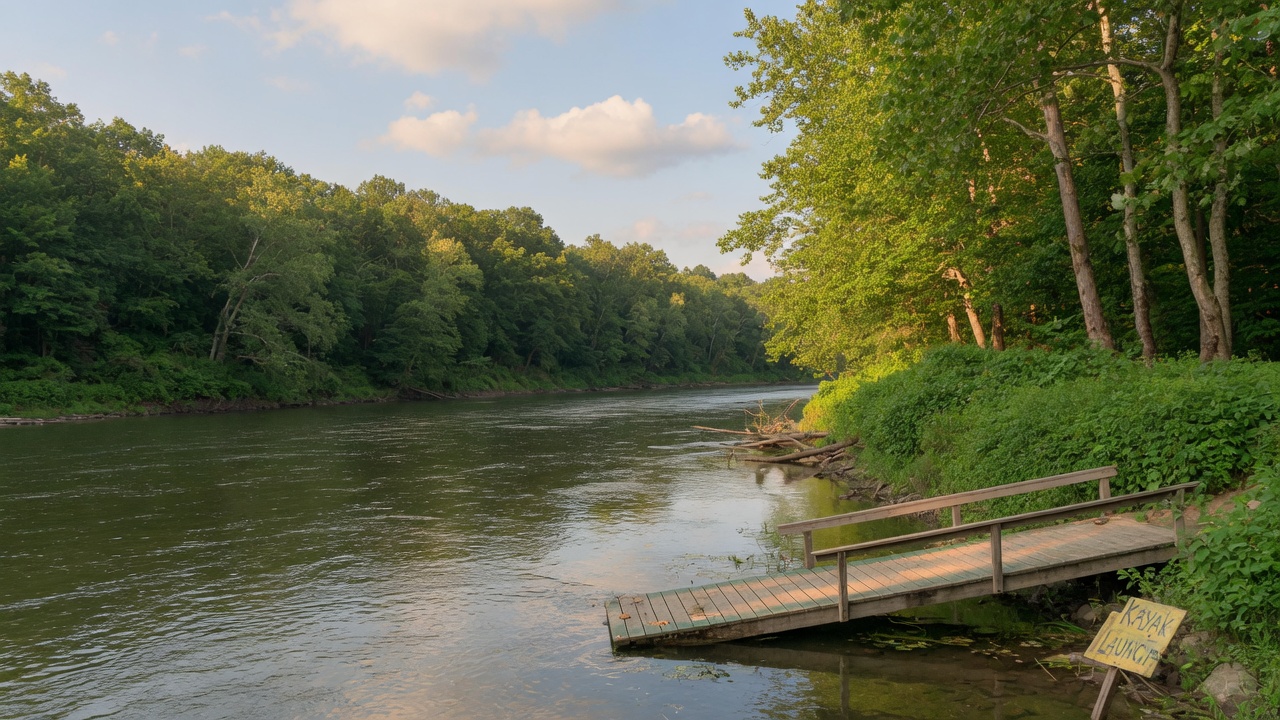
The archive kept growing. In 2018 a night float guide swore a beached “log” breathed and blinked amber. After the high-water spring of 2022, trail runners measured dinner-plate webbed prints in flood mud before the sun erased them. In July 2025 a paddleboarder’s phone froze on a rolling dark ridge—then lost the clip. Phones fail; stories don’t. Full write-ups live on the Sightings Archive.
-
Today · Tourist era
Own the legend, walk the river
This website, stickers on tackle boxes, family scavenger hunts, and evening strolls along public access—Kitchi-Amik now works the way great small-town myths should: drawing people outside, connecting them to water, and giving the Shenango a character as memorable as its fog.
Your chapter is welcome. Bring curiosity, leave the banks cleaner than you found them, and if the current goes strangely quiet… tip your cap.
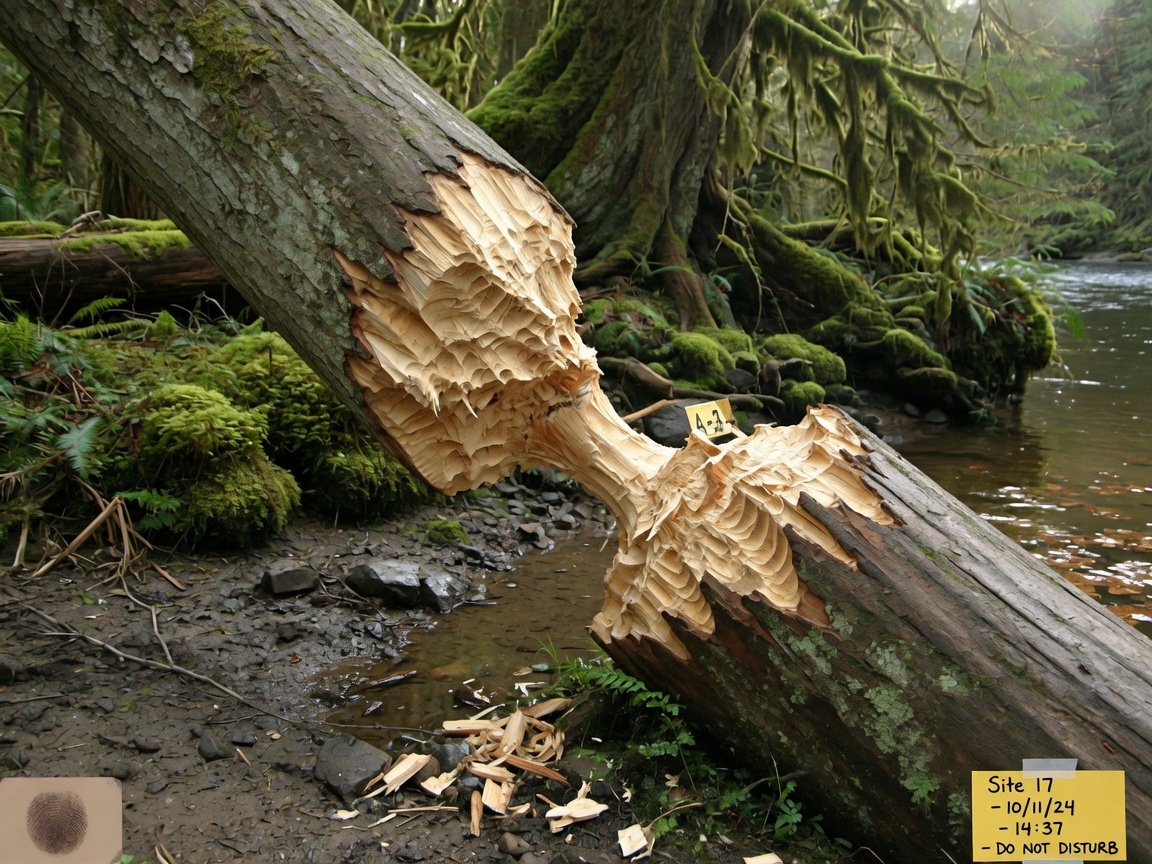
Artifacts of the imagination
Story nights in the valley love “evidence”: overbuilt tracks, gnawed timber, disputed photos, journal facsimiles. Treat them as theater. The real artifact is the river itself—still here, still worth the trip.